

Hey there! As a multicore cable supplier, I often get asked about the standard sizes of multicore cables. In this blog post, I'll dive deep into this topic and share some insights that I hope will be super useful for you.
First off, let's understand what multicore cables are. Essentially, they're cables that have multiple cores or conductors within a single sheath. These cables are used in a wide range of applications, from industrial machinery to household electrical systems. The standard sizes of these cables can vary based on different factors, like the application they're meant for, the amount of current they need to carry, and the voltage requirements.
One of the most common ways to measure multicore cables is by the cross - sectional area of the individual cores. This is usually measured in square millimeters (mm²). Some of the standard cross - sectional areas you'll often come across are 0.5 mm², 0.75 mm², 1.0 mm², 1.5 mm², 2.5 mm², 4 mm², 6 mm², and so on.
For smaller applications, like in control circuits or low - power devices, cables with smaller cross - sectional areas are used. For example, a 0.5 mm² or 0.75 mm² cable might be sufficient for sending signals in a control panel. On the other hand, for applications that require more power, such as large motors or heavy - duty electrical equipment, cables with larger cross - sectional areas, like 4 mm² or 6 mm², are needed.
Another factor that determines the size of multicore cables is the number of cores. Cables can have anywhere from 2 cores to dozens of cores. Two - core cables are commonly used in simple electrical circuits, like power cords for small appliances. Three - core cables are often used for applications where an earth connection is required, such as in electrical heaters or other grounded devices.
In industrial settings, you'll often find cables with a higher number of cores. For instance, a 10 - core or 12 - core cable might be used in complex control systems where multiple signals need to be transmitted simultaneously. These cables allow for a more organized and efficient way of wiring, reducing the clutter and making maintenance easier.
Now, let's talk about some specific types of multicore cables and their standard sizes.
YY CY SY LiYCY Flexible Control Cable YY CY SY LiYCY Flexible Control Cable is a popular choice for control applications. These cables usually come in a range of cross - sectional areas from 0.5 mm² to 6 mm², and the number of cores can vary from 2 to 24. They're known for their flexibility, which makes them easy to install in tight spaces and around corners.
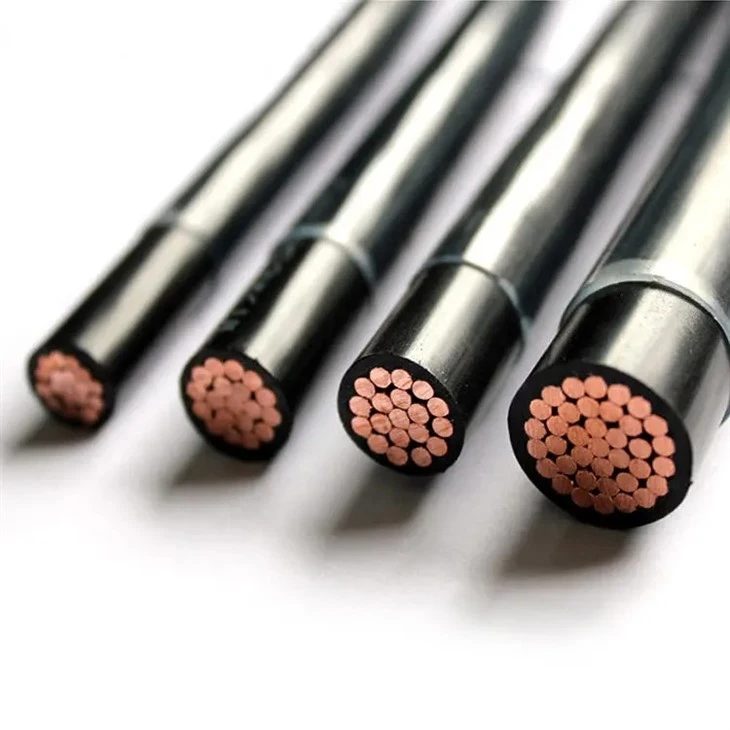

Thhn Cable, a well - known type of multicore cable, is often used in building wiring. Thhn Cable丨Manufacturer in China offers a variety of sizes. The cross - sectional areas typically range from 1.5 mm² to 25 mm², and the number of cores can be 2, 3, or more depending on the specific application.
The 4core* 1.5 Mm² Flexibility PVC Copper Cable is another great option. As the name suggests, it has 4 cores, each with a cross - sectional area of 1.5 mm². This type of cable is commonly used in household electrical wiring, especially for circuits that require a moderate amount of power and a certain level of flexibility.
When choosing the right size of multicore cable for your project, it's crucial to consider a few things. First, you need to know the current - carrying capacity. This is determined by the cross - sectional area of the cores. A cable with a larger cross - sectional area can carry more current without overheating. You also need to think about the voltage rating. Different applications require different voltage levels, and the cable must be able to handle that voltage safely.
In addition, environmental factors play a role. If the cable is going to be used in a harsh environment, like an area with high temperatures, moisture, or chemicals, you'll need a cable with appropriate insulation and protection. For example, cables with PVC insulation are suitable for general - purpose use, but in more demanding environments, you might need cables with special insulation materials like XLPE (Cross - Linked Polyethylene).
As a multicore cable supplier, I've seen firsthand how important it is to choose the right cable size. Using the wrong size can lead to all sorts of problems, from inefficient power transmission to safety hazards. That's why I'm always here to help my customers make the best choice for their specific needs.
If you're in the market for multicore cables, whether it's for a small DIY project or a large - scale industrial installation, don't hesitate to reach out. I can provide you with detailed information about the different sizes, types, and applications of multicore cables. We can have a chat about your requirements, and I'll do my best to recommend the most suitable cable for you.
In conclusion, understanding the standard sizes of multicore cables is essential for anyone involved in electrical work. By considering factors like cross - sectional area, number of cores, current - carrying capacity, voltage rating, and environmental conditions, you can ensure that you choose the right cable for your project. And remember, as your multicore cable supplier, I'm here to support you every step of the way. So, let's start a conversation and find the perfect cable solution for you.
References:
- Electrical Wiring Handbook
- Industrial Electrical Installation Guide