

Hey there! As a Teflon cable supplier, I've gotten a ton of questions about how our cables hold up in high - humidity environments. So, I thought I'd take a deep dive into this topic and share what I know.
First off, let's talk about what Teflon cable is. Teflon, also known as polytetrafluoroethylene (PTFE), is a synthetic fluoropolymer. It's used in cables because it has some really awesome properties. You can check out our Teflon Insulated High Temperature Cable and Teflon High - temperature Wire for more details on our products.
Now, onto high - humidity environments. High humidity means there's a lot of water vapor in the air. This can be a real challenge for a lot of materials, but Teflon cable is different.
One of the key features of Teflon is its hydrophobic nature. That means it doesn't like water. When water comes into contact with Teflon, it forms beads and rolls off easily. This is super important in high - humidity areas because it prevents water from soaking into the cable. If water were to soak in, it could cause all sorts of problems like short - circuits, corrosion, and reduced insulation performance.
In terms of electrical performance, Teflon cable maintains its high dielectric strength even in high - humidity conditions. Dielectric strength is a measure of how well a material can resist electrical breakdown. With Teflon cable, you don't have to worry about the humidity causing a drop in this important property. So, your electrical systems can keep running smoothly without any hiccups due to moisture.
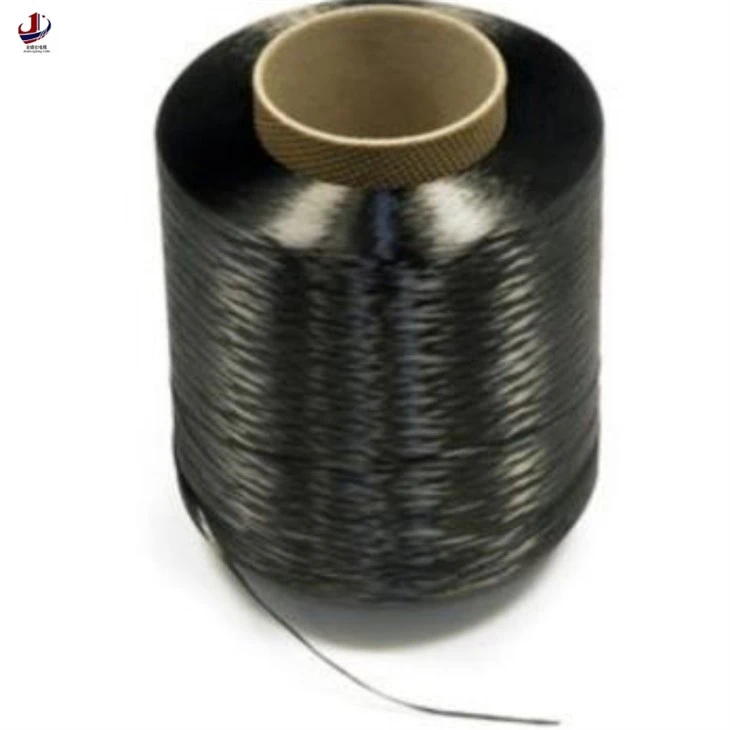
Another great thing about Teflon cable in high - humidity environments is its chemical resistance. Water in high - humidity areas can sometimes carry other chemicals, like salts in coastal regions or pollutants in industrial areas. Teflon is highly resistant to these chemicals. It won't react with them, which means the cable's integrity is maintained over time. You can find out more about the materials we use, like Carbon Fiber Yarn 1K 3K 6K 12K 24K 48K, which also contribute to the cable's overall performance.
Let's talk about mechanical properties. Teflon cable has good flexibility, and this doesn't change much in high - humidity environments. Unlike some other materials that can become brittle or lose their shape when exposed to moisture, Teflon cable stays flexible. This is important because it allows for easy installation and use in various applications, even in damp conditions.
Now, I know you might be thinking, "Well, that sounds great, but is there any downside?" The truth is, while Teflon cable is really good in high - humidity, it's not completely immune. Over a very long period of time, extreme humidity can have a minor impact on the cable. For example, if the cable is constantly submerged in water (which is different from just high humidity in the air), there could be some very slow absorption of water molecules. But this is a very rare scenario and usually only happens under extremely harsh conditions.
In practical applications, Teflon cable is used in a wide range of high - humidity settings. In marine applications, where the air is full of saltwater vapor, our cables are used to power navigation equipment, lighting, and other electrical systems on boats and ships. They can withstand the corrosive effects of the salt - laden air and keep everything running properly.

In industrial settings with high humidity, like some food processing plants or paper mills, Teflon cable is used to connect machinery. The high dielectric strength and chemical resistance ensure that the electrical connections are stable and safe, even in the presence of moisture and various chemicals.
In data centers located in humid regions, Teflon cable is used for networking. The stable electrical performance means that data can be transmitted without interference, which is crucial for the smooth operation of the entire data center.
So, if you're in an industry or location with high humidity and you're looking for a reliable cable solution, Teflon cable is definitely worth considering. It offers great performance in terms of electrical, chemical, and mechanical properties.
If you're interested in learning more about our Teflon cables or want to start a procurement discussion, don't hesitate to reach out. We're here to help you find the right cable for your specific needs.
References
- Textbooks on polymer materials and their properties in different environments.
- Industry reports on cable performance in high - humidity conditions.