

Hey there! As a supplier of New Energy Cables, I've seen my fair share of counterfeit products in the market. It's a real headache, not just for us suppliers but also for the end - users. Counterfeit cables can pose serious safety risks and may not perform as well as genuine ones. So, in this blog, I'm gonna share some tips on how to identify counterfeit New Energy Cables.
1. Check the Packaging
The first thing you can do is take a close look at the packaging. Genuine New Energy Cables usually come in high - quality packaging. The labels are clear, with sharp printing and no smudging. The font size and style are consistent throughout the label.
On the other hand, counterfeit cables often have poorly printed packaging. The colors might be off, and the labels could look faded or blurry. Sometimes, the spelling on the label might be incorrect, which is a dead giveaway. For example, if you see a misspelled technical term related to New Energy Cables on the packaging, it's likely a fake.
Another thing to check is the barcode. Real cables have barcodes that can be scanned and verified through the official system. Counterfeiters may print fake barcodes that won't work when scanned. So, always have a barcode scanner handy and give it a try.
2. Examine the Cable Itself
Let's move on to the cable itself. Start by looking at the outer jacket. A genuine New Energy Cable will have a smooth and uniform outer jacket. The texture should feel consistent all around the cable.
Counterfeit cables may have a rough or uneven outer jacket. You might notice bumps, bubbles, or other irregularities on the surface. This is because counterfeiters often use low - quality materials and substandard manufacturing processes.
Next, check the color of the cable. While the color might not be a foolproof indicator, most genuine New Energy Cables have a standard color scheme. For instance, some cables have a specific shade of black or gray. If the color looks too bright, too dull, or just off - color compared to what you're used to seeing, it could be a sign of a counterfeit.
The cable's diameter is also important. Measure the cable with a caliper. Genuine cables have a precise diameter as specified in the product specifications. Counterfeit cables may deviate from these standards, either being too thick or too thin.
3. Look at the Conductors
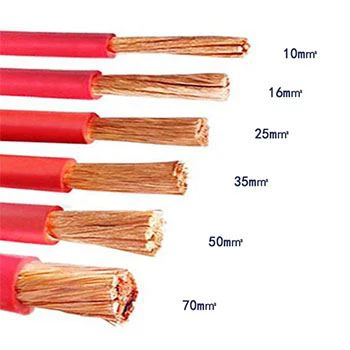
The conductors are the heart of the cable, and they can tell you a lot about its authenticity. Real New Energy Cables use high - quality conductors, usually made of copper or aluminum. The conductors should be shiny and have a smooth surface.
If you cut a small section of the cable (only do this if you're allowed to, of course), you can examine the cross - section of the conductors. Genuine conductors have a uniform cross - section, without any gaps or impurities.
Counterfeit conductors, on the other hand, may look dull and have a rough surface. They might also contain impurities, which can affect the cable's electrical conductivity. In some cases, counterfeiters may use cheaper metals or alloys instead of pure copper or aluminum, which can lead to overheating and other safety issues.
4. Check the Markings
Markings on the cable are another important clue. Genuine New Energy Cables have clear and permanent markings on the outer jacket. These markings include the cable's specifications, such as the voltage rating, current capacity, and wire gauge.
The markings should be legible and evenly spaced. They are usually printed using a high - quality printing method that won't fade or rub off easily.
Counterfeit cables may have faint or smudged markings. Sometimes, the markings might be inaccurate or inconsistent with the actual cable's specifications. For example, a cable might be marked with a high voltage rating but in reality, it can't handle that much voltage.
5. Consider the Price
Price can be a big indicator of whether a cable is genuine or counterfeit. If a New Energy Cable is being sold at a price that's significantly lower than the market average, it's probably too good to be true.
Counterfeiters can offer their products at lower prices because they use cheap materials and don't have to invest in research, development, and quality control. But remember, buying a cheap counterfeit cable can end up costing you more in the long run due to safety risks and poor performance.
6. Look for Certifications
Genuine New Energy Cables usually come with various certifications. These certifications are issued by recognized organizations and indicate that the cable meets certain safety and quality standards.
Some common certifications for New Energy Cables include UL (Underwriters Laboratories) certification, CE (Conformité Européene) certification, and RoHS (Restriction of Hazardous Substances) certification.
When you're buying a cable, ask the seller for the certification documents. You can also verify the authenticity of these certifications on the official websites of the issuing organizations. Counterfeit cables may claim to have these certifications, but upon verification, you'll find that the certificates are fake.
7. Buy from Reputable Sources
One of the best ways to avoid counterfeit New Energy Cables is to buy from reputable sources. As a supplier, I know that established suppliers have strict quality control measures in place. They source their cables from reliable manufacturers and can provide you with proper documentation and support.
Avoid buying cables from unknown online sellers or street vendors. These sources are more likely to sell counterfeit products. If you're unsure about a seller, do some research. Check online reviews, ask for recommendations from other professionals in the industry, and make sure the seller has a good reputation.
Conclusion
Identifying counterfeit New Energy Cables is crucial for ensuring safety and performance. By following these tips - checking the packaging, examining the cable, looking at the conductors, checking the markings, considering the price, looking for certifications, and buying from reputable sources - you can significantly reduce the risk of buying a counterfeit cable.
If you're in the market for high - quality New Energy Cables, including Battery Cables, feel free to reach out. We're here to provide you with genuine products that meet your needs. Whether you're a small - scale user or a large - scale industrial client, we've got the right cables for you. Let's have a chat and discuss your requirements. I'm confident that we can find the perfect solution for your New Energy Cable needs.
References
- Industry standards for New Energy Cables.
- Experience and knowledge gained from working as a New Energy Cable supplier.