

Are there power cables with built - in surge protection?
Hey there! I'm a supplier of power cables, and I often get asked this question: Are there power cables with built - in surge protection? Well, let's dig into this topic and find out.
First off, what exactly is a power surge? A power surge is a sudden increase in voltage that can last for a very short time, but it can cause a whole lot of damage to electrical devices. It can come from various sources, like lightning strikes, power grid switching, or even the startup and shutdown of large appliances. When a surge happens, it can fry sensitive electronic components, leading to costly repairs or replacements.
So, the idea of having power cables with built - in surge protection sounds pretty great, right? You might think it would be a simple solution to protect your electrical systems from these unpredictable surges. But in reality, it's a bit more complicated than that.
In the market, there aren't many power cables that come with built - in surge protection as a standard feature. The main reason is that the design and manufacturing of such cables are quite challenging. Surge protection typically involves components like metal - oxide varistors (MOVs) or gas - discharge tubes. These components are usually found in surge protectors, which are separate devices from the cables.
MOVs are really good at diverting excess voltage to the ground when a surge occurs. They act like a kind of safety valve for the electrical current. Gas - discharge tubes work in a similar way, but they are better at handling very high - energy surges. However, integrating these components directly into a power cable is not easy.
One of the problems is space. Power cables are designed to be as compact as possible to fit into different installations. Adding surge - protection components would make the cables bulkier and less flexible. This could make them difficult to install in tight spaces, which is a big no - no for many applications.
Another issue is heat dissipation. Surge - protection components generate heat when they divert excess voltage. In a normal surge protector, there are usually ventilation systems to get rid of this heat. But in a cable, it's much harder to dissipate heat effectively. If the heat builds up, it can damage the cable insulation and reduce its lifespan.
Despite these challenges, there are some specialized power cables that do have some form of surge protection. For example, some high - voltage cables used in industrial settings may have enhanced insulation and shielding that can provide a certain level of protection against surges. These cables are designed to withstand harsh electrical environments and are often used in power plants, factories, and other large - scale facilities.
Let's talk about some of the power cables we offer at our company. We have the HV Xlpe Insulated Cable. This cable is known for its high - voltage capacity and excellent insulation properties. The XLPE (Cross - Linked Polyethylene) insulation provides good resistance to electrical stress, which can help protect against minor surges. It's commonly used in power transmission and distribution systems.
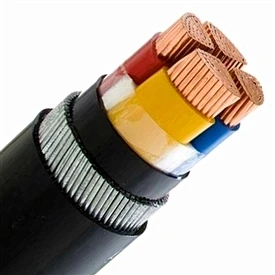
Then there's the High Voltage Xlpe Insulated Steel Wire Armoured Cable. The steel wire armour not only provides mechanical protection but also adds an extra layer of shielding. This shielding can help reduce the impact of electromagnetic interference, which is often associated with power surges. It's a great choice for outdoor and underground installations where the cable may be exposed to various environmental factors.
And we also have the XLPE Underground Armoured Power Cable. This cable is designed for underground use, where it can be more vulnerable to surges caused by ground - based electrical disturbances. The combination of copper core and XLPE insulation makes it a reliable option for powering underground facilities.
Even though these cables have some features that can help with surge protection, they may not be enough on their own in all situations. In most cases, it's still a good idea to use a separate surge protector in addition to these cables. A surge protector can be easily installed at the point of use, like near your electrical appliances or at the main electrical panel. It can provide more comprehensive protection by quickly responding to surges and diverting the excess voltage.
So, to answer the question, yes, there are some power cables with certain aspects of surge protection, but they are not as common as you might think. And while they can offer some level of protection, it's usually best to combine them with a dedicated surge protector for optimal safety.
If you're in the market for power cables or want to learn more about surge protection, don't hesitate to reach out. We're here to help you find the right solutions for your electrical needs. Whether you're working on a small residential project or a large - scale industrial installation, we've got the expertise and the products to support you.
References

- Electrical Engineering Handbook, Third Edition, CRC Press
- Power System Analysis and Design, Fifth Edition, Cengage Learning